

The IMPACT Governance System™
A practical operating system for governance and leadership in mission-driven organisations.
Many charities and mission-driven organisations have strong values, committed leaders and clear intentions — yet governance challenges still arise.
These challenges rarely stem from a single issue. Instead, they often reflect a lack of alignment between strategy, governance structures, leadership culture, performance oversight and stakeholder accountability.
The IMPACT Governance System™ was developed through extensive practical work with charities, housing organisations and community bodies across Ireland and the UK.
It provides a clear and practical way for boards and leadership teams to understand and strengthen these interconnected elements.
The system focuses on six core elements that underpin effective governance and organisational leadership.
A System, Not a Set of Tools
The IMPACT Governance System™ is a structured model for understanding and strengthening governance and leadership across an organisation.
It has been developed through extensive practical work with charities, housing organisations and community bodies across Ireland and the UK.
Rather than focusing on individual policies or isolated improvements, the system takes a whole-organisation view — recognising that governance effectiveness depends on how different elements interact.
At its core are six interconnected elements:


Organisations typically engage with the system through three stages:
IMPACT Health Check™
A short self-assessment tool that helps boards reflect on governance across the six elements.
IMPACT Diagnostic™
The IMPACT Diagnostic builds on our Governance Health Check, offering a facilitated and evidence-informed assessment of governance across your organisation.
Using our IMPACT Governance System™, we assess governance across six core domains: Insight, Mission, Performance, Assurance, Culture and Transparency.
IMPACT Governance System™
Practical support to strengthen governance systems, leadership alignment and strategic delivery.
Explore Your Governance in Practice
Most organisations benefit from taking a step back to reflect on how their governance operates across the six elements.
The IMPACT Health Check™ provides a practical starting point for that reflection.
What This Looks Like in Practice
The IMPACT Health Check™ translates the system into a practical tool for boards and leadership teams.
It provides a clear, visual overview of governance performance across the six elements.
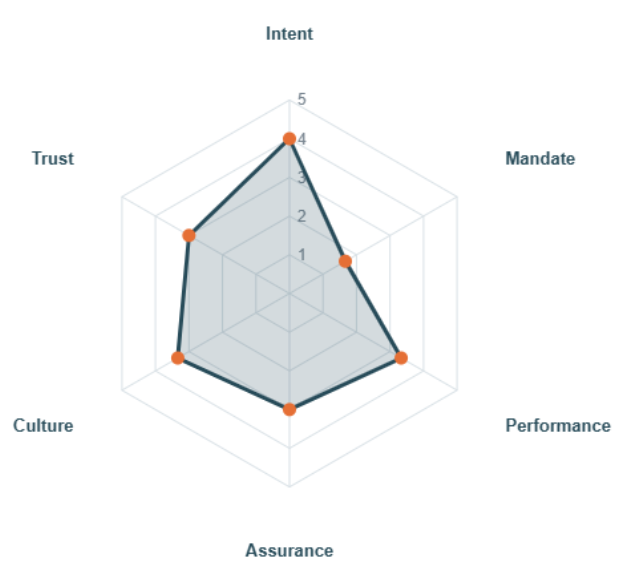

A visual governance “wheel” highlights strengths and areas requiring attention, helping boards quickly identify priorities.
A structured summary provides average scores and an indicative status across each element.